

2026-06-12
Polycarbonate Roof Screws: Applications, Features, and Selection Guide
Polycarbonate roof screws are essential fastening components used for installing polycarbonate roofing panels on residential, commercial, agricultural, and industrial structures. Because polycarbonate sheets expand, contract, and respond differently to temperature changes compared with metal or traditional roofing materials, choosing the right roofing screws is important for long-term roof stability and weather resistance.
A proper fastening system does more than hold panels in place. It also helps prevent leaks, panel cracking, corrosion, wind uplift, and premature roof failure. When selecting polycarbonate roof screws, buyers should consider screw material, coating, washer design, screw length, panel thickness, structural substrate, and installation method.
目錄
- Section 1: What Are Polycarbonate Roof Screws?
- Section 2: Key Features of Polycarbonate Roof Screws
- Section 3: Common Applications
- Section 4: How to Choose the Right Polycarbonate Roof Screws?
- Section 5: Installation Considerations
- Section 6: Common Problems and Solutions
- Section 7: Future Trends in Roofing Fasteners
- FAQ
Section 1: What Are Polycarbonate Roof Screws?
Why are specialized screws needed for polycarbonate roofing?
Polycarbonate roofing panels are lightweight, durable, and commonly used in outdoor roofing systems. However, they also expand and contract with temperature changes. If the wrong fasteners are used, the panels may crack, warp, leak, or become loose over time.
Specialized polycarbonate roof screws are designed to fasten the panels securely while reducing stress on the sheet surface. They are often paired with sealing washers to help prevent water from entering through the screw holes.
How do polycarbonate roof screws differ from standard screws?
Standard screws may not provide proper sealing, corrosion resistance, or panel protection. Polycarbonate roof screws are usually designed for outdoor use and often include corrosion-resistant coatings, self-drilling tips, and waterproof washers.
The washer is especially important because it spreads pressure around the fastening point and helps reduce the risk of cracking or leakage.
What roofing structures commonly use these fasteners?
Polycarbonate roof screws are commonly used for patio roofs, carports, greenhouses, agricultural sheds, industrial warehouse roofing, skylights, walkways, canopies, and commercial roofing systems.
They are suitable for projects where transparent, translucent, or lightweight roofing materials need secure installation.
Why is proper fastening important for roof longevity?
Improper fastening can lead to water leakage, loose panels, cracked sheets, rusted screws, and reduced roof service life. If screws are over-tightened, the polycarbonate panel may crack. If screws are too loose, the roof may leak or shift under wind pressure.
Correct fastening helps the roof remain stable, weather-resistant, and easier to maintain over time.
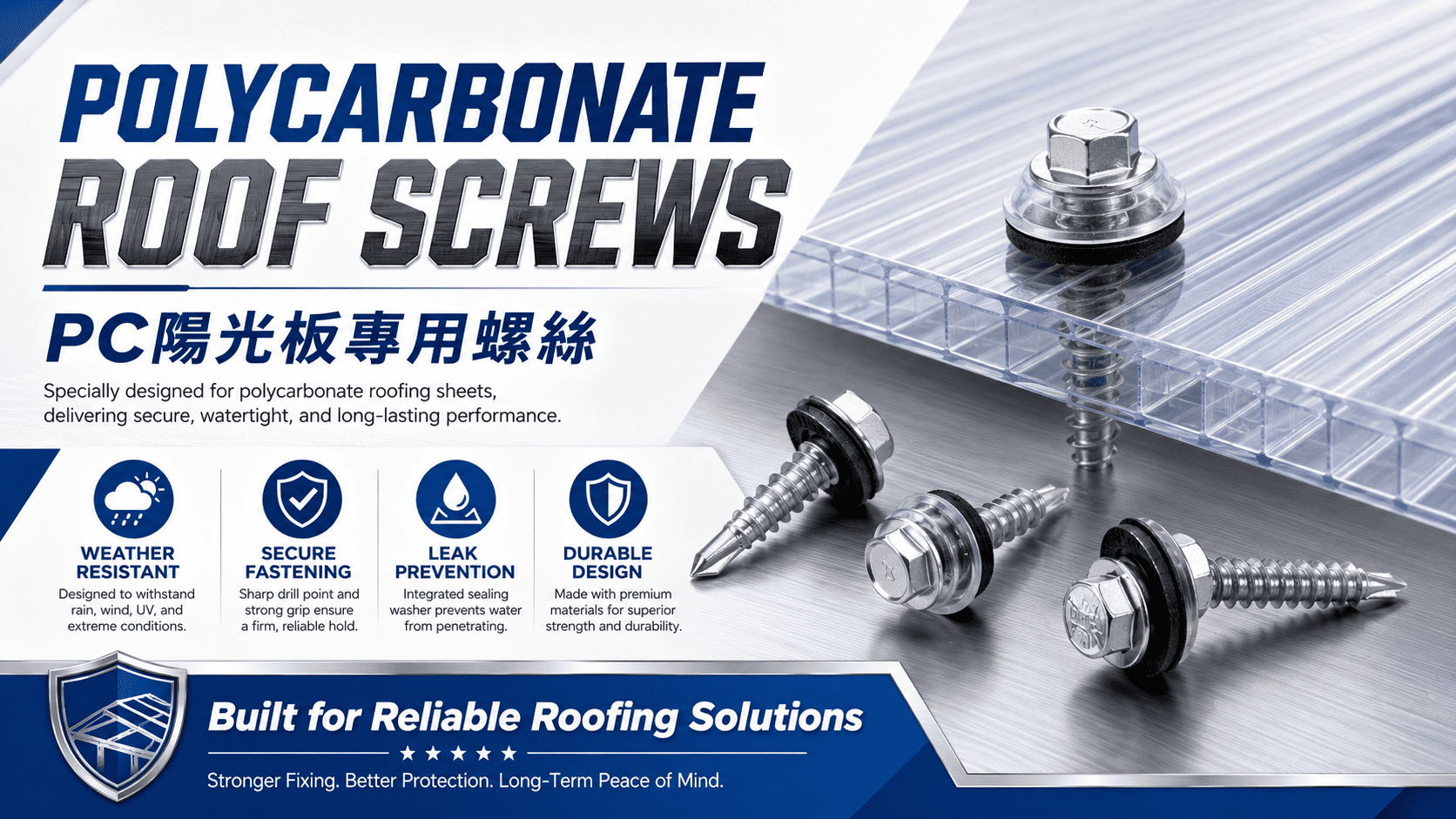
Section 2: Key Features of Polycarbonate Roof Screws
Corrosion-resistant materials and coatings
Roofing screws are exposed to rain, humidity, sunlight, and sometimes salty coastal air. Corrosion-resistant materials such as stainless steel or coated carbon steel are commonly used to improve durability.
For coastal or highly humid environments, better corrosion protection is especially important.
Waterproof sealing washer design
A sealing washer helps block water from entering through the screw hole. Common washer materials may include EPDM rubber or other weather-resistant materials. A good washer should remain flexible and stable under sunlight, heat, and rain.
Washer quality directly affects waterproofing performance around fastener points.
Self-drilling and self-tapping capabilities
Some polycarbonate roof screws are designed with self-drilling or self-tapping tips, making installation faster and reducing the need for pre-drilling into metal or timber structures. However, depending on panel type and installation guidelines, pre-drilling the polycarbonate sheet may still be recommended to allow thermal expansion.
The correct installation method should always match the panel system and structural material.
UV resistance and outdoor durability
Outdoor roofing fasteners must withstand sunlight and changing weather conditions. UV-resistant washers and durable coatings help maintain fastening performance over time.
If the washer hardens, cracks, or loses flexibility, leakage can occur around the screw.
Section 3: Common Applications
Residential patio roofing projects
Polycarbonate sheets are commonly used in residential patios, balconies, carports, and garden shelters. Polycarbonate roof screws help secure the sheets while maintaining waterproofing around each fastening point.
For residential use, appearance, rust resistance, and easy installation are often key concerns.
Industrial warehouse roofing systems
Industrial buildings may use polycarbonate panels for daylighting, skylight strips, or partial roofing systems. In these applications, screw strength, corrosion resistance, and long-term sealing performance are important.
Fasteners must also withstand vibration, wind load, and temperature changes.
Greenhouses and agricultural structures
Greenhouses often use polycarbonate sheets because they allow light transmission while providing protection from weather. Fasteners used in agricultural environments should resist moisture, chemicals, and outdoor exposure.
Proper fastening helps prevent leaks that could affect crops, equipment, or storage conditions.
Commercial skylight installations
Polycarbonate roof screws are also used in skylights, canopies, commercial roofing panels, and covered walkways. These projects often require both visual neatness and reliable waterproofing.
Choosing high-quality screws and washers can reduce future maintenance issues.
Section 4: How to Choose the Right Polycarbonate Roof Screws?
Selecting the correct screw length
Screw length should be selected according to panel thickness, washer thickness, and the structural material below. A screw that is too short may not provide enough holding strength, while a screw that is too long may be difficult to install or unnecessary for the structure.
The screw must penetrate the supporting material securely without damaging the panel.
Choosing suitable washer materials
Washer material affects waterproofing and durability. EPDM washers are commonly used in roofing because they can provide good sealing and weather resistance. In high-temperature or high-UV environments, washer quality becomes even more important.
A poor washer may fail before the screw itself.
Understanding roof panel thickness requirements
Different polycarbonate sheets have different thicknesses and structures, such as solid sheets, corrugated sheets, or multiwall panels. The screw and washer system should match the sheet type.
For some panels, oversized holes may be needed to allow expansion and contraction.
Matching screws to structural materials
The correct screw type depends on whether the structure is steel, aluminum, wood, or another substrate. Self-drilling screws may work well for metal frames, while wood screws may be more suitable for timber structures.
Using the wrong thread or tip may reduce holding strength and increase installation problems.
Section 5: Installation Considerations
Proper spacing between screws
Screw spacing affects roof stability and wind resistance. Too few screws may allow panels to lift or move, while too many screws may create unnecessary stress points.
Spacing should follow the roofing panel manufacturer’s recommendations and project conditions.
Preventing over-tightening issues
Over-tightening is one of the most common mistakes when installing polycarbonate sheets. If the screw is tightened too much, the washer may deform and the panel may crack around the hole.
The screw should be tightened enough to seal properly, but not so tightly that it damages the sheet.
Allowing for thermal expansion of polycarbonate sheets
Polycarbonate expands and contracts with temperature changes. Installation should allow for this movement. In many cases, slightly oversized holes or compatible fastening systems are used to prevent stress cracking.
Ignoring thermal expansion can shorten the lifespan of the roof panels.
Waterproofing best practices
Waterproofing depends on proper screw placement, washer quality, correct tightening, panel overlap, and roof slope. Screws should usually be installed at appropriate positions according to the panel profile, not randomly through unsupported areas.
A complete roofing system should consider both fasteners and panel layout.
Section 6: Common Problems and Solutions
Roof leakage around fasteners
Leaks often occur when washers deteriorate, screws are installed incorrectly, holes are too large, or screws are over-tightened. Replacing damaged washers, using correct screws, and checking installation torque can help solve the problem.
Regular inspection is recommended for outdoor roofing systems.
Cracked polycarbonate panels caused by incorrect installation
Cracking may occur when screws are tightened too much, holes are not pre-drilled correctly, or expansion movement is restricted. Using appropriate washers and allowing thermal movement can reduce cracking risk.
Panels should never be forced tightly against fasteners.
Corrosion in coastal environments
Coastal areas expose screws to salt and moisture, increasing corrosion risk. Stainless steel or high-quality coated screws are often preferred in these environments.
Choosing low-grade fasteners may lead to rust stains, weakened holding strength, and early replacement.
Loose screws due to vibration or weather conditions
Wind, vibration, and repeated temperature changes may loosen screws over time. Correct screw type, proper installation, and periodic maintenance can help maintain roof stability.
In high-wind areas, fastening design should be reviewed carefully.
Section 7: Future Trends in Roofing Fasteners
Advanced corrosion-resistant coatings
Roofing fasteners are increasingly using improved coatings to resist corrosion, especially for coastal, industrial, and high-humidity environments. Better coatings can extend service life and reduce maintenance.
Sustainable construction materials
As construction industries focus more on sustainability, roofing hardware may use longer-lasting materials, recyclable components, and improved manufacturing processes.
Durability itself is also part of sustainability because it reduces replacement frequency.
High-performance sealing technologies
Future roofing screws may include better sealing washer systems, improved elastomer materials, and designs that reduce leakage risk under thermal movement and weather exposure.
Smart building applications and roofing systems
As roofing systems become more integrated with energy, daylighting, and building management systems, fasteners may also need to support more specialized roofing materials and installation requirements.
Conclusion
Polycarbonate roof screws play a critical role in maintaining the structural integrity and weather resistance of roofing systems. Choosing the correct screw type, washer design, corrosion protection, and installation method can significantly improve roof performance and service life.
For best results, buyers should consider panel thickness, structural material, outdoor environment, waterproofing requirements, and thermal expansion before selecting roofing screws. Proper installation and regular inspection can help reduce leaks, cracking, corrosion, and long-term maintenance issues.
FAQ
What are polycarbonate roof screws?
Polycarbonate roof screws are specialized fasteners used to install polycarbonate roofing panels on metal, wood, or other structural supports.
Can regular screws be used on polycarbonate sheets?
Regular screws are not recommended because they may not provide proper sealing, corrosion resistance, or panel protection.
How do I prevent roof leaks around screws?
Use proper sealing washers, avoid over-tightening, follow correct screw spacing, and inspect washers regularly.
What screw length should I choose?
The screw length should match the panel thickness, washer thickness, and structural material to ensure secure fastening.
Are stainless steel roofing screws better?
Stainless steel screws are often better for coastal, humid, or corrosive environments because they provide stronger rust resistance.
How often should roofing screws be inspected?
Roofing screws should be inspected periodically, especially after storms, strong winds, or long-term outdoor exposure.
